By Marissa Ferrari, Partner, Sustainable Economies · Published November 2026.
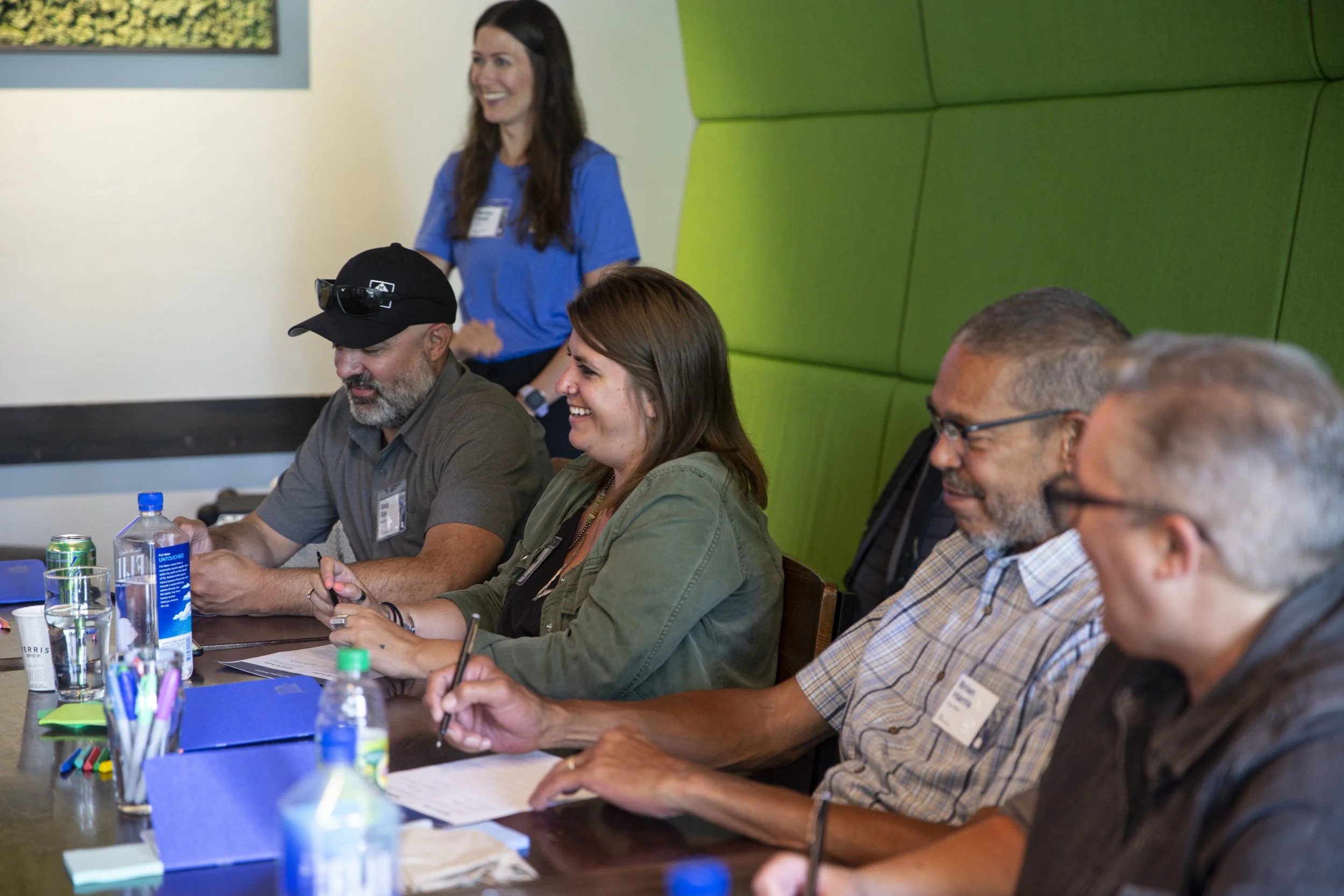
A community workshop is a facilitated event where members, visitors, and other stakeholders rotate through small-group discussions on key topics while a facilitator captures their comments. It is a low-cost, low-effort audience research method that helps nonprofits learn what their supporters value and what would motivate deeper engagement. Recently, Sustainable Economies used community workshops to guide membership strategy for The Wilderness Center and to refine the strategic plan for the Cleveland Museum of Natural History’s land protection program.
Why does membership decline matter to nonprofits?
A membership program provides vital support to many kinds of nonprofits. Members contribute revenue that supports your mission, and they are often your biggest cheerleaders: brand ambassadors, advocacy voices, and volunteers. It’s understandable, then, that a dip in membership would warrant further study.
What did Sustainable Economies do for The Wilderness Center?
The Wilderness Center, a nature center in Stark County, Ohio, asked Sustainable Economies to study its membership decline and recommend how to reverse it. We focused on audience research: understanding what members and visitors value most and what would motivate them to engage more deeply.
We designed a four-phase audience research process:
- Discovery workshop, including an audience persona exercise, for the leadership team
- Community workshop for members and visitors
- One-on-one interviews with more committed members and visitors
- Digital survey of anyone who had visited The Wilderness Center at least once in the past two years
The community workshop proved especially valuable because it was relatively low-cost and low-effort to complete – while allowing for in-depth, two-way conversations that yielded meaningful insights while building trust and stronger relationships.
How does a community workshop work?
A community workshop facilitates many small-group discussions that explore a topic in depth. For The Wilderness Center, we guided conversations on five topics: conservation, being in nature, education programs, being in community, and membership.
Participants rotated between tables devoted to each topic, visiting two to three tables during the workshop. This let us pose each topic’s questions to multiple groups, and we captured comments on flip charts. Afterward, we analyzed all of the comments and looked for patterns across the data.
What did The Wilderness Center learn?
The insights challenged long-held assumptions, even though staff understood their audience well. When members and visitors were asked, “What is the most important reason to become a member of The Wilderness Center?”, the most popular answer by far was to support the mission of protecting land and preserving habitat for wildlife.
Previously, the organization had focused its membership appeals on tangible benefits, such as early access to special event tickets and discounts. Based on the research, we recommended substantive changes to The Wilderness Center’s membership messaging across its marketing and communications platforms.
Key finding: Members joined primarily to support the mission, not for perks.
Can a community workshop also test a strategic plan?
Yes. For the Cleveland Museum of Natural History’s land protection program, Sustainable Economies invited everyone who had contributed to the main audience research phase back for a community workshop to review the 90%-complete strategic plan.
Participants told us that some terminology was confusing, and that certain terms could be defined in multiple ways. The Museum confirmed the definitions it was using and added a glossary of terms to the plan, a simple but powerful change that made its goals clearer.
Even more, inviting the audience research participants – who included neighboring landowners, conservation partners, and donors – back to give a second round of feedback signaled the Museum’s gratitude for their contributions, and interest in continued partnership. On the whole, the community workshop sparked excitement and engendered support for the new strategic plan.
Is Sustainable Economies offering community workshops as a standalone service?
Yes. Beginning in January 2027, Sustainable Economies will offer the community workshop as a standalone service for nonprofits. Contact us to be notified as more details become available.
FAQ
What is a community workshop in nonprofit research?
A facilitated session where stakeholders rotate through small-group, topic-focused discussions while facilitators record their comments for later analysis.
Who should attend?
Members, visitors, and other supporters. Sustainable Economies has also invited prior research participants back to review draft plans.
How is it different from a survey or interview?
Surveys and interviews gather individual responses. A community workshop surfaces group conversation, so you hear how people discuss, debate, and build on each other’s ideas, and you can pose the same question to several groups.
What can a nonprofit learn from one?
Why people join, what they value, and which messages or terms resonate or confuse. At The Wilderness Center, it showed that mission matters more than member perks.
Marissa Ferrari is a branding & communications strategist for land trusts, park districts, and public gardens. Marissa’s work supports nonprofits and public agencies looking to increase donations, grow membership, recruit more right-fit volunteers, and strengthen their reputation. Marissa specializes in working with land trusts, park districts, public gardens, nature centers, museums, coalitions, and many other mission-driven organizations at the intersection of nature and communities.