By Elizabeth Schuster, Environmental Economist
Most conservation and park leaders get stuck in the same place when they try to quantify the economic impact of their work.
It starts the moment they talk about how their conservation and park efforts “support economic development.”
The reality is – “support economic development” doesn’t mean anything unless you define it.
Here are 4 steps to improve your ability to measure and communicate the economic contribution from your conservation and park efforts:
- Define your audience. Talk to key audiences and decision makers and ask them what they care most about.
- Define your impact. Identify your organization’s unique economic contribution and include it as a goal in your strategic plan.
- Measure your impact. Track data on the economic outcomes of your programs.
- Communicate your impact. Communicate your impact through a narrative that weaves in stories and data.
DEFINE YOUR AUDIENCE
Sometimes I hear statements from nonprofits leaders such as, “We know what decision makers care the most about: it’s jobs.”
This type of sweeping generalization is usually not helpful in conversations where your team is trying to define how you will communicate your contribution to the local economy. After all, decision makers are not all the same, and many might not think job creation is the most important economic metric for their constituents.
What is more effective is to make a list of the various audiences that you hope to influence with economic data. Next, ask them what they care most about. Bonus step – ask them what type of data they use to make decisions. Then, you can align the format of your data with the type of data they would need in decision making.
DEFINE YOUR IMPACT
There is a second problem with defaulting to statements like “We know what decision makers care the most about: it’s jobs.”
It is that there might be other ways your work contributes more meaningfully to economic outcomes. The following are six common ways that parks and conservation may be contributing to local economic outcomes, plus an example on how your organization can build a strategy around that outcome in your strategic plan.
Tourism impact – The amount that out-of-town visitors spend locally when visiting your parks
- Strategy idea: Partner with your tourism bureau on promoting your parks during tourism conferences. Directly message to visitors to your parks and events to spend money at local restaurants – and/or to spend the night and support local hotels as well.
Jobs created and retained – If jobs are indeed the most impactful metric for your audience, include them as a goal in your strategic plan. Jobs as an indicator are often measured together with the multiplier effect – the amount your organization spends on vendors and services locally plus the amount your staff (re)spends locally from wages earned.
- Strategy idea: Consider jobs across the sector and not just in your organization, and how through collaborative partnerships you can continue to support jobs in this sector.
- Strategy idea: Partner with a researcher who conducts economic impact assessments using a modeling tool like IMPLAN. Talk to that researcher early in the planning process about which data they would need on your direct economic activity, the percentage of your spending that goes to local businesses.
Nature-based solutions – such as the amount of flooding that is reduced because your forested parks and wetlands absorb floodwaters and reduce the damage from flooding to homes
- Strategy idea: Select locations for wetland and forest restoration projects that are near homes and infrastructure that would have the potential to absorb floodwater and reduce flooding.
Workforce development – This could include job training for parks, recreation, and “green jobs” as well as education, internships and on-the-job training for students.
- Strategy idea: Partner with workforce development entities in your county to ensure that those who have been trained have more opportunities for job placement. Partner with community colleges and vocational schools.
Amenities that attract talent – Improving the quality of life for communities with more parks, green space and trails can attract more talent so more people move to your community and fill open job postings.
- Strategy idea: Partner with your county economic development organization on strategies to attract new talent to the area; partner with the large corporations in your area that have open job positions.
Entrepreneurialism – Support new, locally owned businesses, like a kayak rental, a new for-profit glamping business, and a new restaurant next to your biggest park.
- Strategy ideas: Develop partnerships with local entrepreneurs who want to support access to nature.
MEASURE YOUR IMPACT
Measuring success is exponentially easier when you define what success looks like during strategic planning. Defining your organization’s contribution upfront also makes it more likely you will succeed in delivering that outcome.
Some leaders have concerns about measuring success. How do you measure your impact if you are partnering on a project and do not have ultimate control over the entire process? My advice is to better define your contribution to the final outcome. Then you can take accountability for your role in the strategy.
COMMUNICATE YOUR IMPACT
One lesson I learned early in my career as an environmental economist is that decision makers do not always believe your economic data unless it is combined with context and relevant stories. Good stories that bring your data to life and showcase a case study go a long way.
Plus, remember that we talked in step 1 about asking decision makers what they care about. That is also the first step in developing a relationship with those decision makers. They are also more likely to trust your data if they have been involved in the development of the strategy and understand how you collected your data.
CONCLUSION
As park and conservation leaders, we are often the catalysts rather than the ultimate owners of an economic outcome. That partnership with the community — whether it’s a new kayak rental business or a healthier workforce — is where the real magic happens.
By defining your impact early and staying connected with your partners throughout the process, you ensure that the economic value of nature isn’t just a cliché talking point, but a measurable reality. When we align our goals with the needs of our community, we make conservation and parks relevant for everyone.
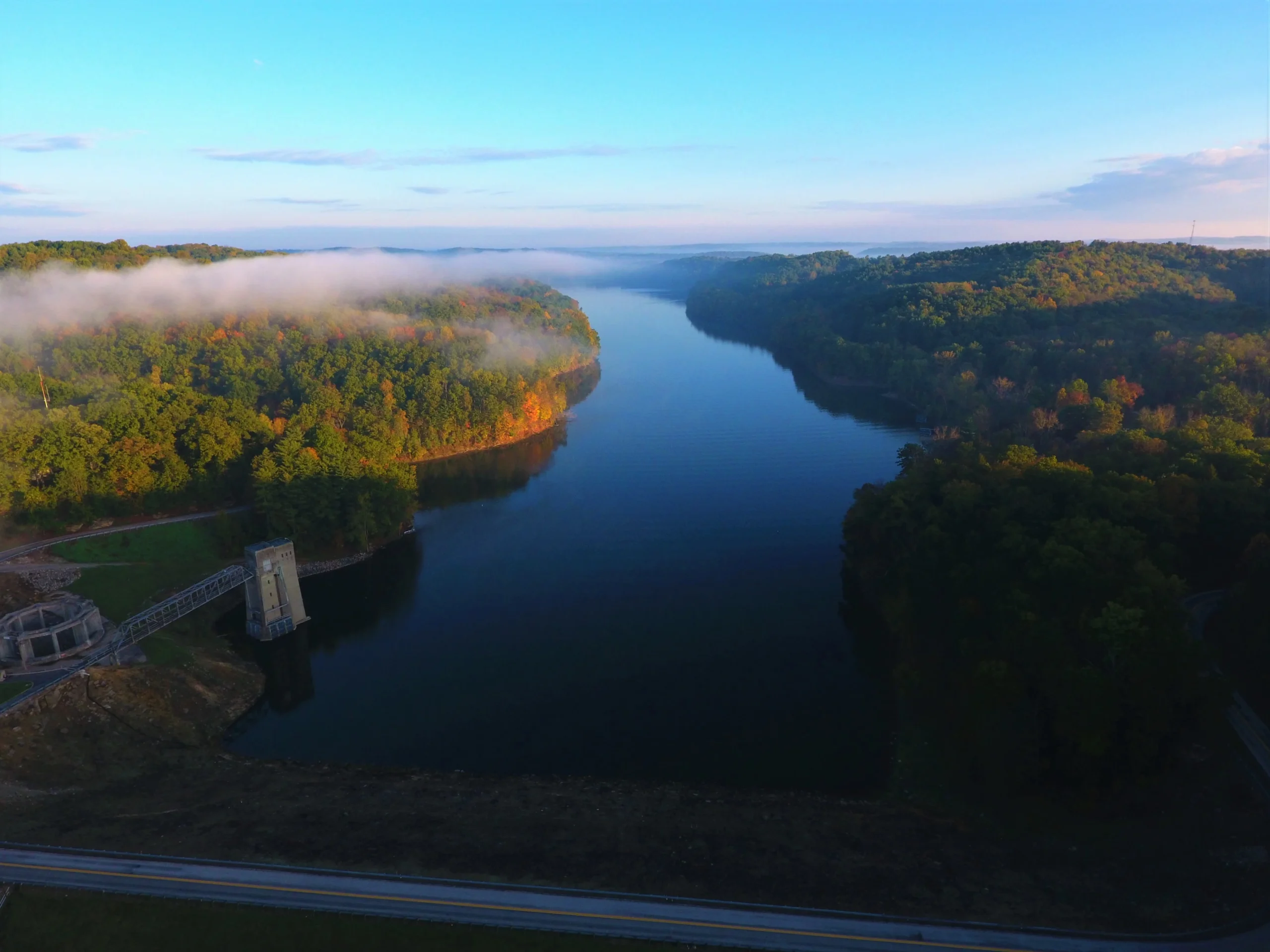
Photo credit: Muskingum Watershed Conservancy District, an example case study on contributing to the local economy through jobs, natural resources, recreation, and access to nature.